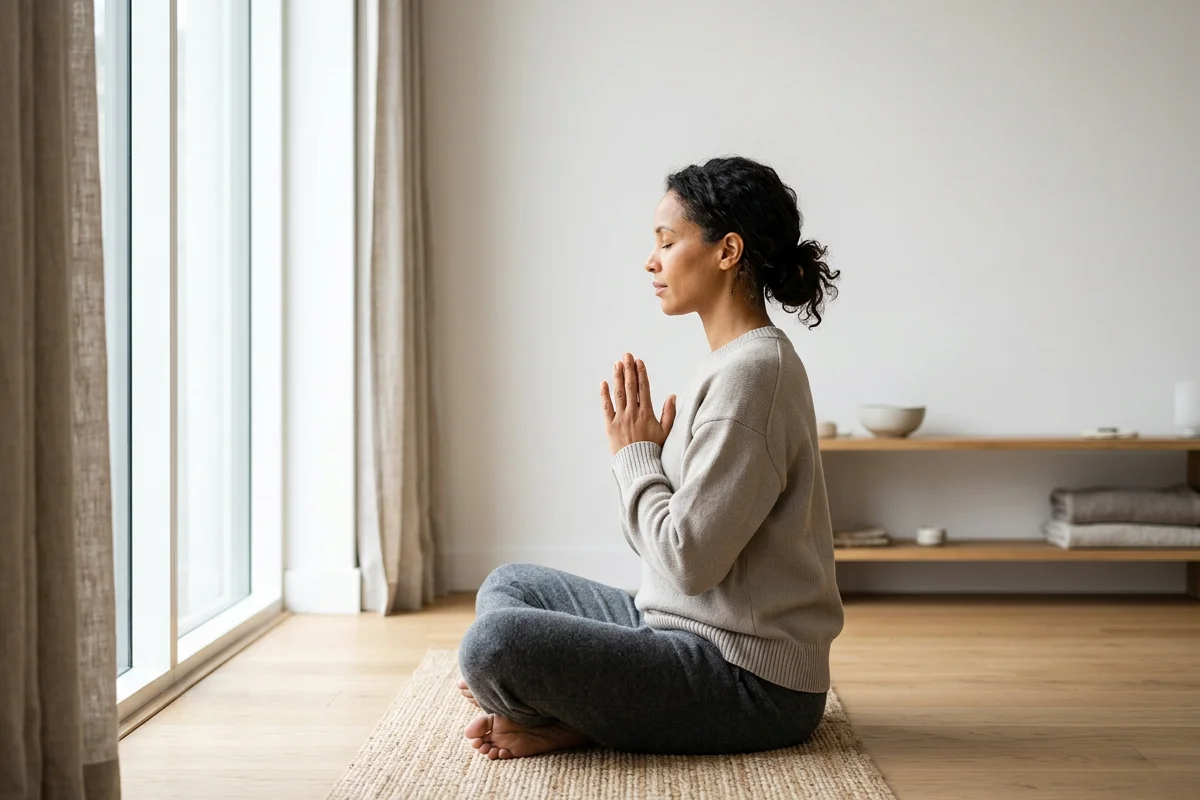
There is something rather beautiful about the simplicity of Gassho.
In a world where we're constantly encouraged to do more, learn more and find the next thing that will make us better at what we do, Gassho invites us to do quite the opposite. It asks us to pause, bring our hands together and just be present.
If you've spent any time exploring Reiki, you'll probably recognise the familiar position of the hands held together in front of the chest. Perhaps you've seen it at the beginning of a Reiki treatment, during a meditation or as part of a practitioner's daily routine.
But Gassho is more than a gesture. It is a meditation practice with roots in Japanese tradition, and one of the foundational practices within Usui Reiki Ryoho.
It's also a lovely reminder that our Reiki practice doesn't always have to involve giving a treatment, working with hand positions or learning something new. Sometimes, the most valuable thing we can do is give ourselves a few moments of quiet.
Let's take a closer look at Gassho, where it comes from and how you can begin incorporating it into your own practice.
What is Gassho?
Gassho (合掌) is a Japanese word that translates roughly as 'two hands coming together'.
You'll probably recognise the gesture from Buddhist traditions, where the palms are brought together in front of the chest as an expression of respect, gratitude and reverence. Within Reiki, Gassho is also used as a meditation practice, known as Gassho Meiso.
The idea is wonderfully simple. You sit quietly, bring your hands together and gently place your attention on the point where your middle fingertips meet. That's it.
There is no complicated visualisation to follow, no particular feeling you need to create and no expectation that your mind should suddenly become completely quiet.
When thoughts arise, as they inevitably will, you notice them and bring your attention back to your fingertips. Over time, this becomes an opportunity to develop concentration, awareness and a little more stillness within yourself.
I particularly like that Gassho doesn't ask us to achieve anything. We aren't trying to reach a special state or have a profound experience. We're giving ourselves permission to be present.
Where does Gassho originate?
Although Gassho is closely associated with Reiki today, its origins go much further back.
The joining of the palms is an ancient gesture found in Buddhist traditions throughout Asia. It has been used in prayer, meditation, greetings and expressions of respect for centuries.
Mikao Usui, the founder of Usui Reiki Ryoho, incorporated Gassho into the Reiki system he developed in Japan. It is traditionally recognised as one of the Three Pillars of Reiki, alongside Reiji-ho and Chiryo. These three practices form an important part of traditional Japanese Reiki teachings.
Gassho provides the opportunity to settle and focus the mind. Reiji-ho relates to allowing Reiki to guide the treatment, while Chiryo refers to the treatment itself.
You may also come across references to practising Gassho in the morning and evening, particularly alongside reflection on the Five Reiki Precepts. Different Reiki lineages and teachers sometimes introduce their own variations, so you may find slightly different instructions depending on where you learned Reiki.
I think it's worth remembering that Reiki has developed through different teachers and traditions over the years. Understanding the traditional roots gives us a lovely foundation, while remaining open to learning how different practitioners approach their practice.
Why do we practise Gassho in Reiki?
For me, one of the loveliest things about Gassho is the opportunity it gives us to transition out of the busyness of everyday life.
Think about how you usually begin your day. Perhaps you're thinking about everything you need to get done, answering messages, organising the family or already worrying about something that hasn't happened yet. Then suddenly you're supposed to sit down and give yourself a peaceful Reiki treatment.
It isn't always that easy to switch off.
Gassho gives us a little breathing space. It allows us to put down, even temporarily, some of the thoughts and distractions we've been carrying around and bring our attention back to the present moment.
Within Reiki, this is particularly useful before a self-treatment or when preparing to work with another person. Rather than rushing straight into the practice, we give ourselves time to become settled and focused.
It also encourages us to reflect on the Five Reiki Precepts and the way we approach our everyday lives.
I think this is an important part of Reiki that can sometimes get overlooked. We spend so much time learning how to practise Reiki that we can forget to explore how its principles might influence the way we live.
Gassho offers a lovely opportunity to reconnect with that intention. Perhaps that's the most important thing to take away from it: you don't need to feel anything extraordinary. Sometimes, sitting quietly and allowing yourself to be present is enough.
What do you need to practise Gassho?
You really don't need much at all. Just find a quiet, comfortable spot where you can sit for a few minutes. Your favourite chair or a little corner of your home is perfect.
No special equipment, crystals or incense needed. Just somewhere you can relax, bring your hands together and enjoy a little time for yourself.
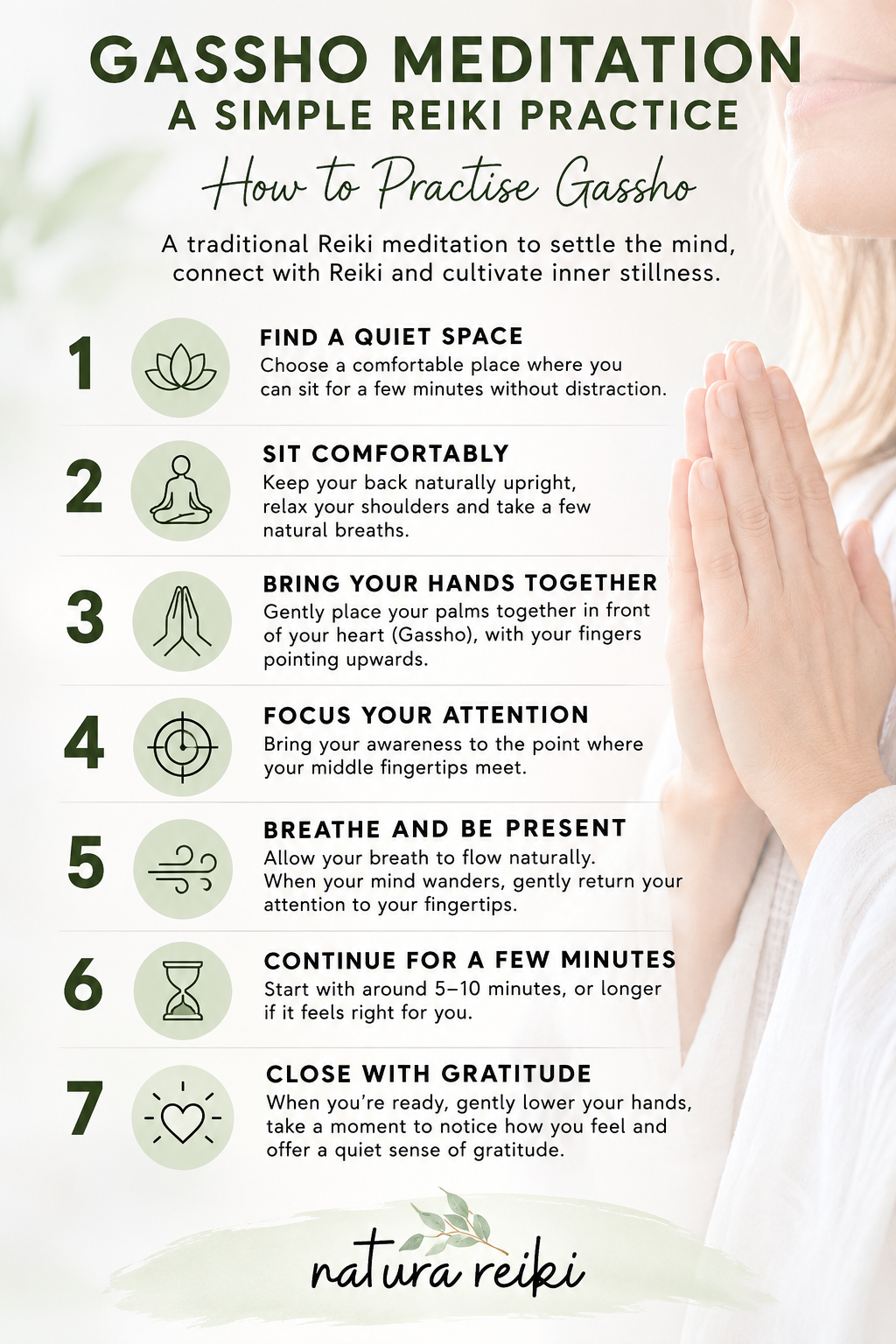
How to practise Gassho: A simple step-by-step guide
If you're new to Gassho, I'd suggest starting with five minutes. You can always spend longer with the practice as you become more familiar with it.
Begin by finding your comfortable seated position.
Allow yourself to settle. Sit with your back naturally upright, relax your shoulders and let your hands rest loosely on your lap for a moment.
Take a few natural breaths and allow yourself to arrive in the space you've created.
Bring your hands together.
Gently bring your palms together in front of your chest, with your fingers pointing upwards.
There is no need to press your hands tightly together. Let them meet naturally, keeping your shoulders and arms relaxed.
If this position becomes uncomfortable, adjust your hands or take a little break.
Bring your attention to your fingertips.
If it feels comfortable, close your eyes and gently direct your attention towards the point where your middle fingertips meet.
Notice the contact between your fingers. You might become aware of warmth, pressure or a slight tingling sensation. You might not notice anything at all.
Just allow whatever is there to be there.
Let your breathing find its natural rhythm.
There is no particular breathing technique you need to follow. Simply become aware of your breath moving in and out.
As your thoughts begin to settle, keep returning your attention to the meeting point of your fingertips.
And when your mind wanders, don't worry. It will. That's perfectly normal.
Perhaps you'll remember something you forgot to do, start planning dinner or suddenly think about an email you need to send. Rather than becoming frustrated, acknowledge the thought and gently return to your practice.
Spend a few moments in stillness.
Continue for five to ten minutes, or longer if you feel comfortable.
When you're ready, gently lower your hands and take a moment before opening your eyes.
Notice how you feel. There is no need to analyse the experience or decide whether it was a good meditation.
You've simply given yourself some time to pause.
Common misunderstandings about Gassho
You don't need to feel energy between your palms or achieve a completely quiet mind for Gassho to be meaningful. Thoughts will wander, and some days will feel easier than others. You only need to notice when your attention drifts and gently bring it back.
Keep your hands comfortable, and remember that Gassho isn't just for preparing to give Reiki. It can be enjoyed on its own as a little moment of stillness in your day.
Bringing Gassho into your everyday Reiki practice
I usually begin my morning with five minutes of Gassho, followed by a little reflection on the Five Reiki Precepts. Although you might prefer to practise before your self-Reiki session, using it as a gentle transition into spending time with yourself.
Or perhaps the evening is when you need it most. A few quiet moments before bed can provide an opportunity to reflect on the day without immediately moving on to tomorrow's responsibilities. You could even make Gassho your entire Reiki practice for the day.
I think there's something important in that idea. We can sometimes feel that we're not doing enough if we're not practising a technique, studying a symbol or spending time working with Reiki energy. But our relationship with Reiki isn't measured by how much we do. Some days, sitting quietly with our hands together is exactly what we need.
Looking to deepen your Reiki practice?
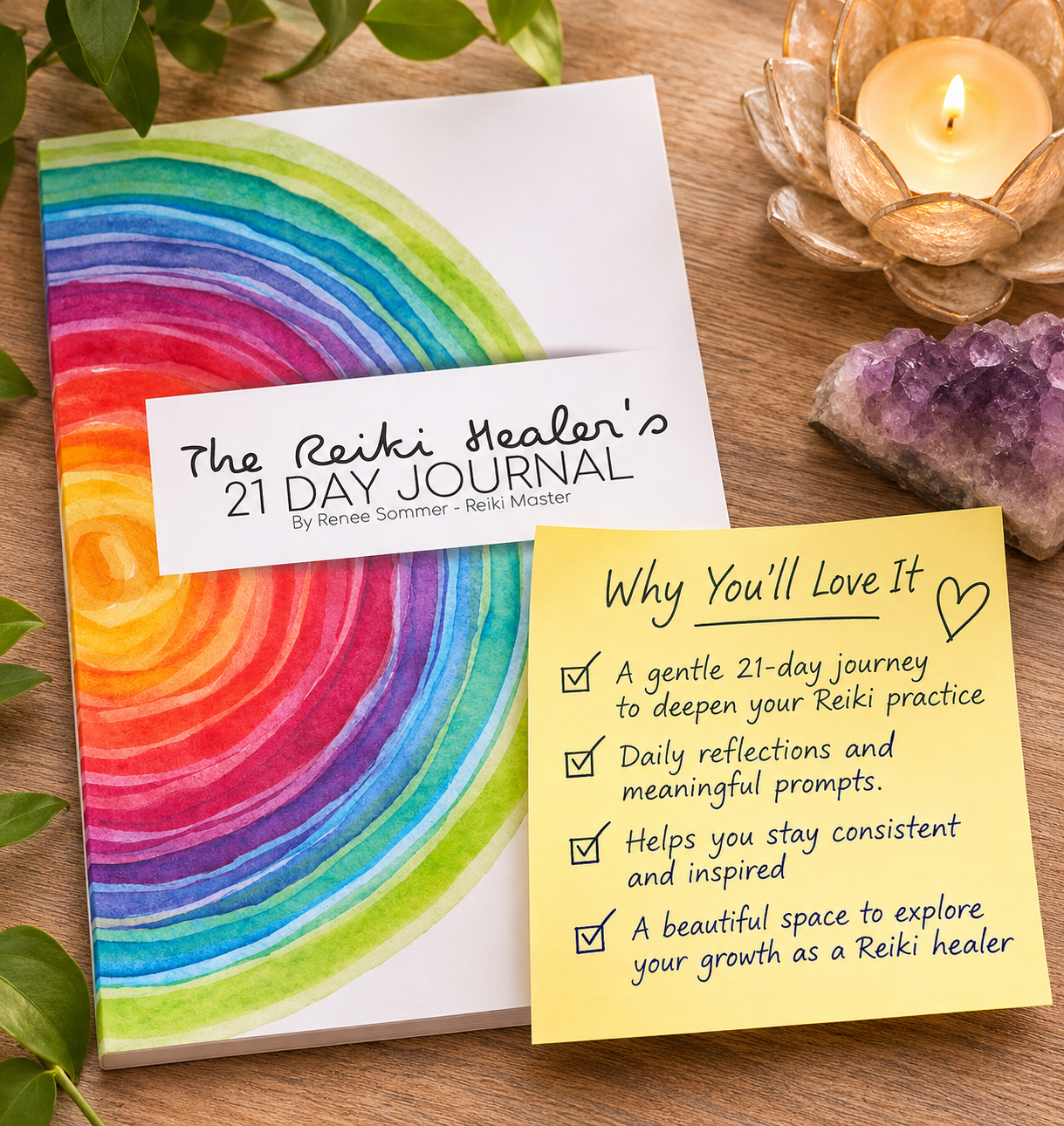
If you enjoy journaling and taking time to reflect on your Reiki journey, The Reiki Healer's 21 Day Journal by Renee Sommer could be a lovely companion. A little daily space to explore your practice, reflect and reconnect with your intentions.
Discover the 21 Day Reiki Journal here
Just a little note: This post contains an affiliate link, which means I may earn a small commission if you make a purchase, at no extra cost to you. Thank you for supporting Natura Reiki! ❤️
A little time for reflection
Before finishing, I'd love you to spend a few moments thinking about your experience with Gassho.
Whether this is your first time trying the practice or something you've been doing for years, there is always room to notice something new.
Maybe you discovered that sitting quietly was harder than you expected, or you found it surprisingly comforting. You might have enjoyed the five minutes where nobody needed anything from you.
Whatever your experience, it's worth acknowledging.
If you keep a Reiki journal, these are a few questions you might like to explore:
What did I notice about myself when I allowed myself to sit quietly?
Was it easy to bring my attention back to my fingertips when my thoughts wandered?
How did I feel before and after practising Gassho?
What does being present mean to me, beyond my Reiki practice?
Is there something I could carry from this practice into my everyday life?
You don't need to write pages of answers. Sometimes a single sentence can tell you more than you expect.
I think one of the most beautiful things about Gassho is that it reminds us we don't always need to be looking for the next thing. We don't need another technique, another tool or another complicated routine to deepen our relationship with Reiki.
Sometimes we just need to stop for a moment, bring our hands together and take a breath, because you deserve that little moment of stillness.
Attain Peace and Restore Balance ♡